
When We First Met Lucy
How a three-foot-tall skeleton became the most famous fossil in the world

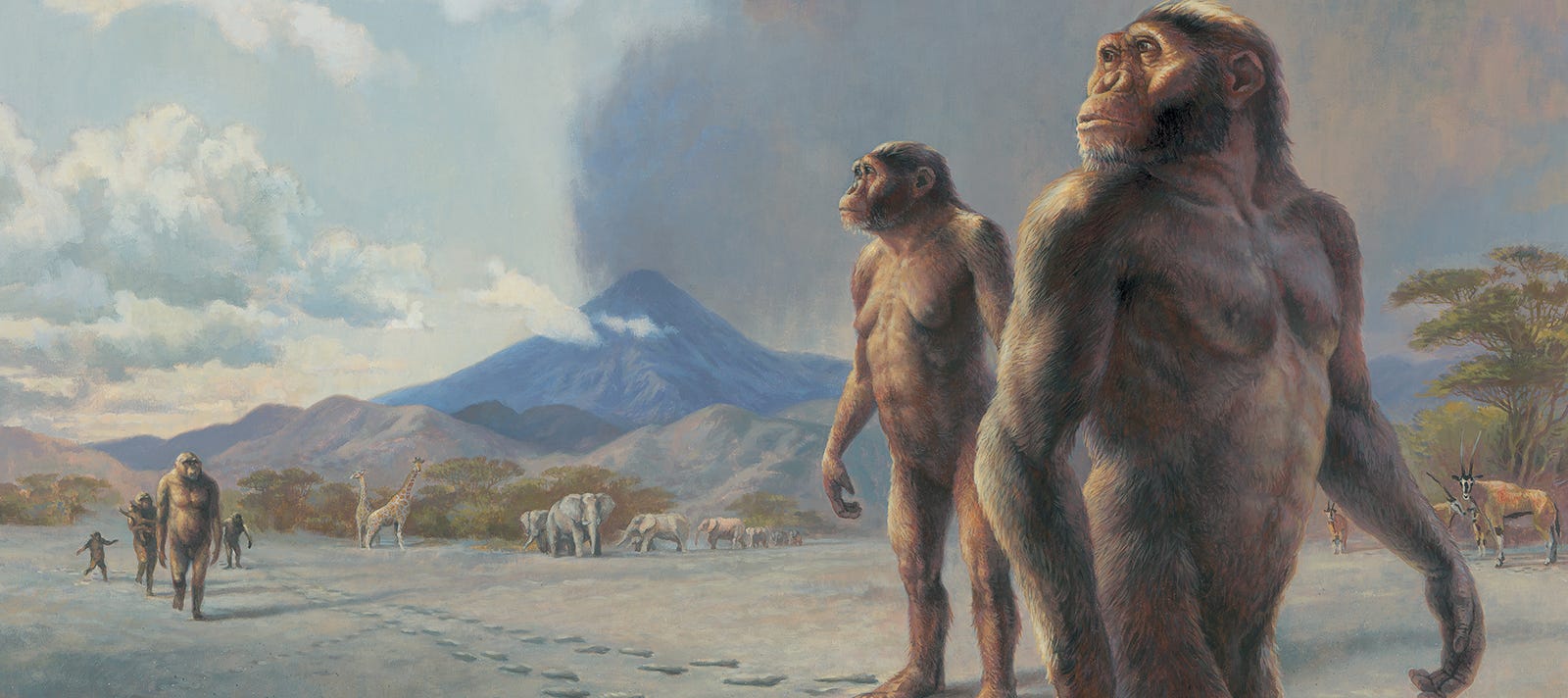
Not many fossils get recognized in airports. Few even get nicknames. Most bones of our distant ancestors sit quietly in drawers, collecting dust, known by specimen numbers like AL 333 or KNM-ER 1470, a jumble of letters and numbers that mean everything to specialists and nothing to anyone else. Lucy was different, she always has been.
She came out of the ground in 1974, a jumble of ribs, vertebrae, and hips, but more whole than most of her kin. By the time she was carefully carried across continents to be studied in the U.S., she was already recognizable. A customs official shown the wrapped parcels and told they were fossils from Ethiopia, replied, “You mean Lucy?”
Her celebrity seemed obvious almost immediately. And I’ve always wondered: why? Paging through old archives, I recently came across Lucy’s debut in American newspapers. In early 1975, the headline thundered: “Scientists hope Lucy reveals secrets of her prehistoric past.” Beneath it, a photo of a young Donald Johanson, standing behind her scattered bones, carefully laid out on a table.
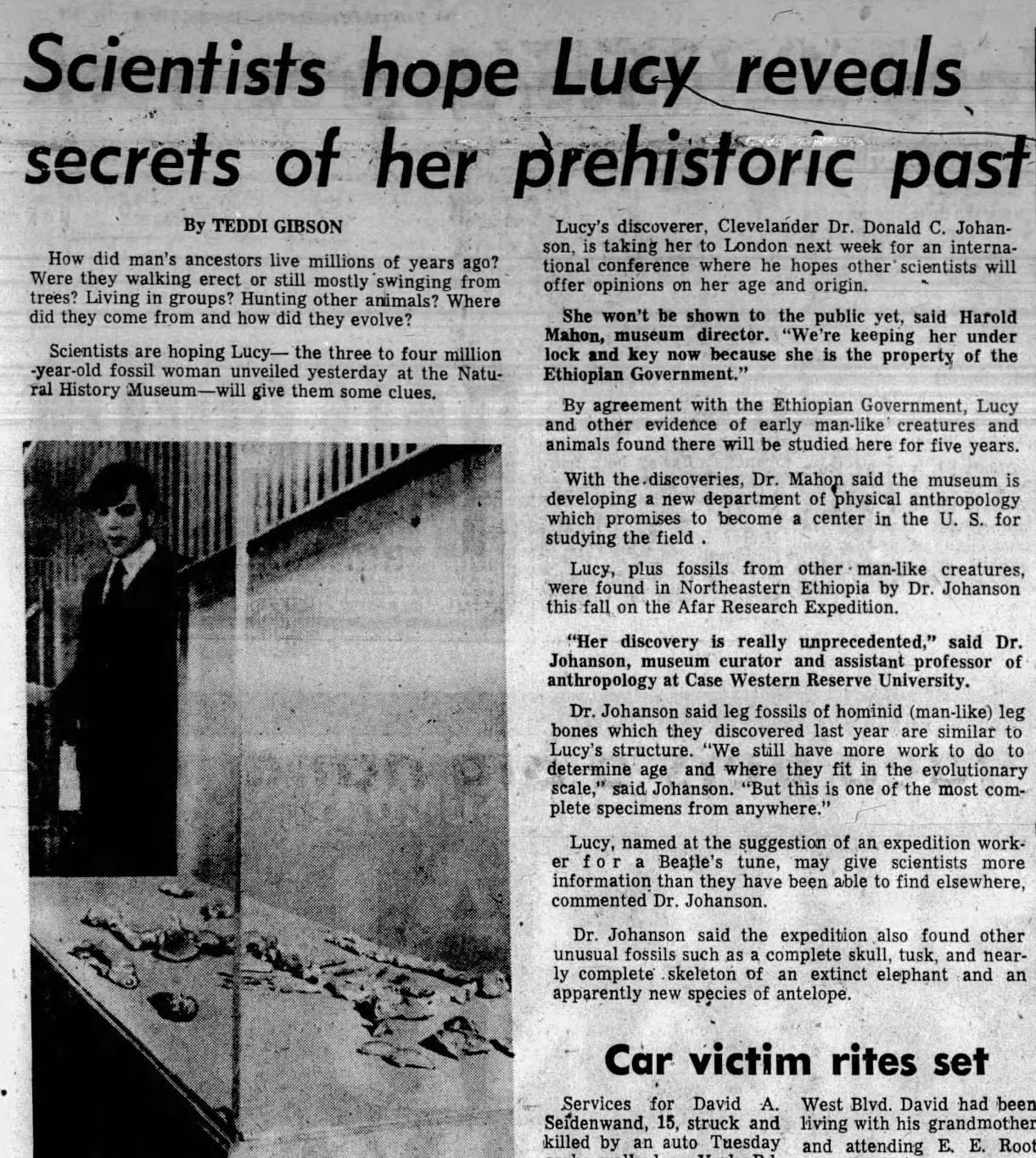
That’s why, right there in the headline. “Her.” She was a person. Lucy wasn’t even formally published yet, that would take several more years. She was still AL 288-1, being puzzled over in notebooks, behind closed doors. But already she was more than that — more than the specimen number, more than the data points. She was treated as someone the public might know.
There are other factors contributing to her fame, of course. Johanson told her story in vivid detail, painting a picture of Lucy not as dusty fragments but as a once-living being. Her completeness helped too: with hips and legs, you could envision her walking across a savanna in a way you couldn’t with a single jawbone. But that nickname made her feel like kin rather than specimen.
That’s how she’s lived ever since: part fossil, part icon. She’s starred in documentaries and bestselling books. Over fifty years after her discovery, other fossils are older, and others still more complete. But none have managed to match Lucy.
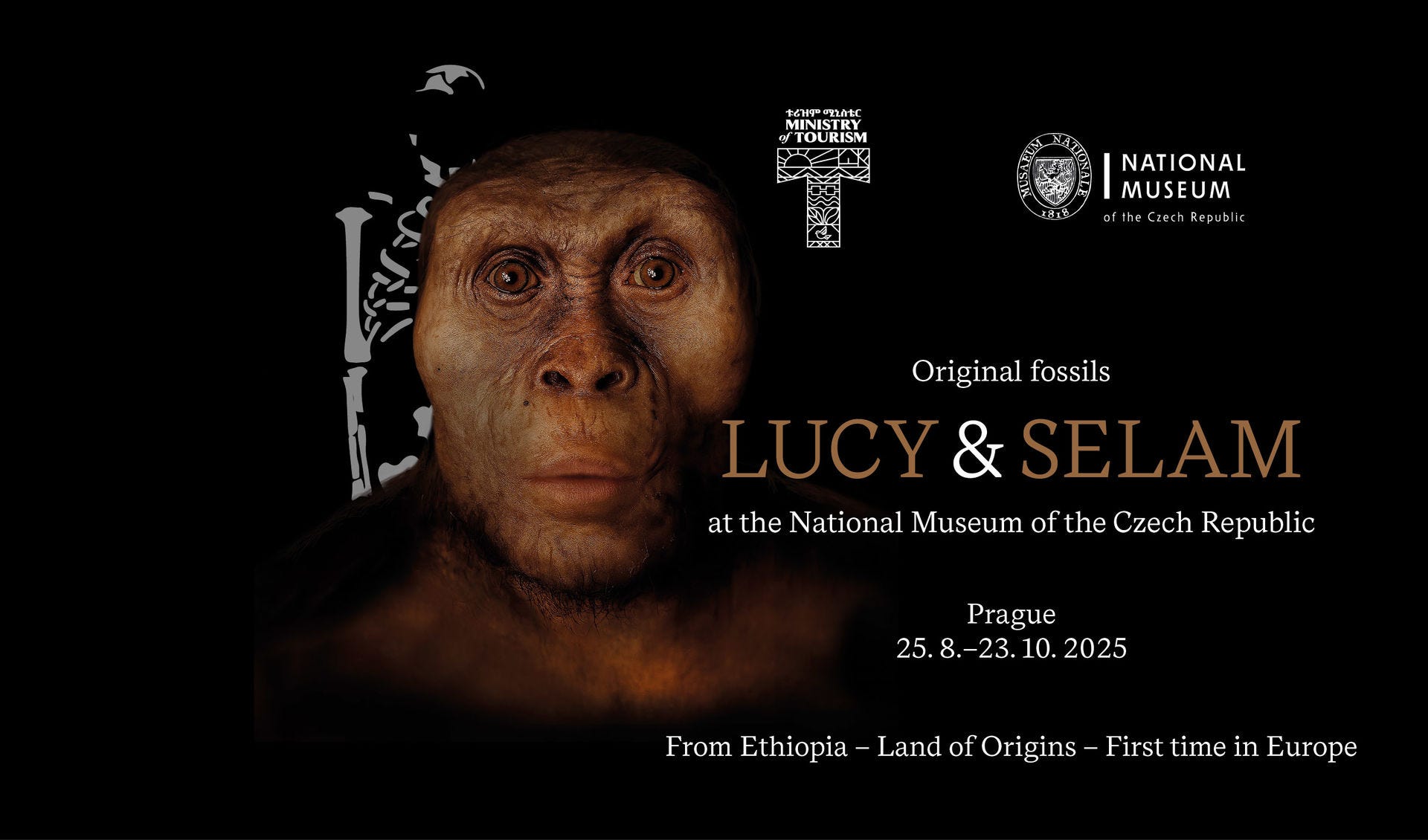
Later this week, I’ll go see her for her first European display — and I hope you’ll come along for the ride. Be sure to subscribe to follow along, I’ll be sharing the details on instagram as well. If you’d like to support my reporting on Lucy in Prague, you can buy me a coffee here. But before I go, I’m curious: Why do you think Lucy has stuck in our collective imagination? Was it her nickname? Her completeness? Or something else? Leave a comment or send me a message and let me know.
I’ll write next from the city of a hundred spires.